A Life Shaped by Public Service, Writing, and Purpose
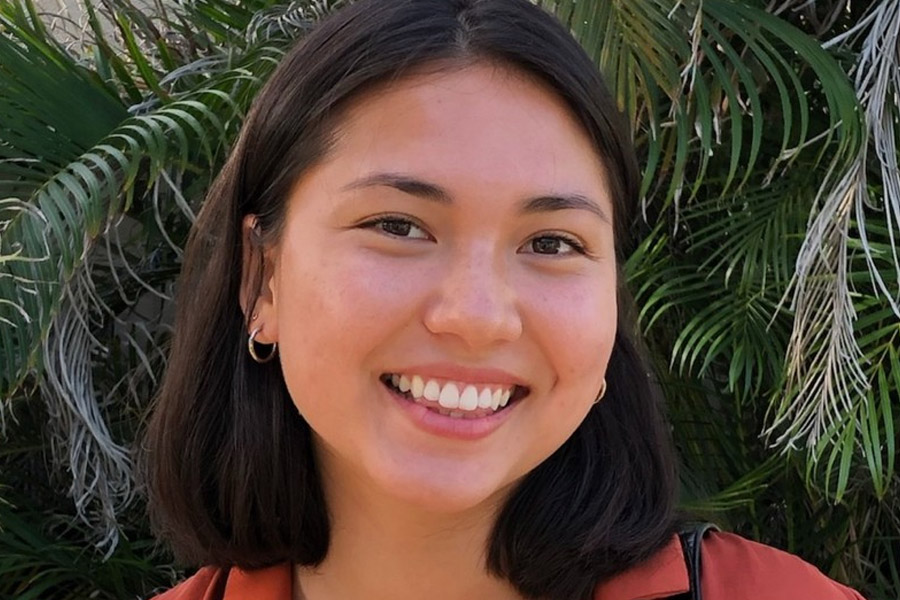
I think Cana Tagawa’s story is layered, not explosive. Her public path is quiet but steady, which matters. She was a Honolulu-born student, Tufts graduate, and communications professional who worked in journalism, civic engagement, climate activism, and nonprofit storytelling. Her path is a bridge between family and civic duty. Discipline and calm ambition flow between them.
Cana’s public persona began at Tufts University, where she studied political science, English, and civics. She was defined as a student interested in civic involvement and legislative responses to inequality in 2020. That mix important. Civic studies provides purpose, English provides voice, and political science provides structure. They form a toolset for understanding and communicating society’s mechanism.
Her background is similarly place-oriented. Honolulu transcends hometown. It depicts a life defined by island isolation, cultural blend, and a sense of community that is both intimate and open. People frequently listen closely before speaking in such settings. Cana’s public work reflects such impulse.
From Student Journalism to Communications Work
One of the most interesting parts of Cana Tagawa’s story is how early her public-facing work began. During college, she was involved in a summer journalism fellowship, writing about local issues and community life. That kind of work is often the first real test of a young writer. It asks for patience, accuracy, and a willingness to step into unfamiliar rooms. I think of it like learning to tune an instrument by ear. No one hands you the melody. You have to find it yourself.
She was also connected to civic outreach work, including efforts tied to census participation and voter engagement. That detail matters because it shows a practical side to her interests. She was not only studying policy and social systems. She was helping people connect to them.
After college, her career moved into nonprofit communications. Public records place her in roles at the Union of Concerned Scientists, Oxfam America, and later Steppingstone. That trajectory gives her professional life a coherent shape. She did not scatter her energy. She focused it. Communications in advocacy spaces is not decorative work. It is translation work. It means taking complex ideas and making them legible, human, and hard to ignore.
Her work on climate and democracy related writing suggests a comfort with subjects that matter and a willingness to stay in the tension. Those topics can be dense, urgent, and politically charged. Handling them well requires a calm hand. Cana appears to have built a career around exactly that kind of responsibility.
Family Ties and the Tagawa Household
Family is a central part of Cana Tagawa’s public identity, even though the available record is narrower than many celebrity family profiles. Her father was Cary-Hiroyuki Tagawa, the actor widely known for films and television roles including Mortal Kombat, The Last Emperor, and The Man in the High Castle. His name carries a certain gravity. He had a long and visible career, and that visibility naturally brought attention to the family around him.
Her mother is Sally Phillips, sometimes referred to in public references as Sally Tagawa. The public material available about her is limited, but the family connection is clear. Together, Cary-Hiroyuki Tagawa and Sally Phillips had three children: Cana, Brynne, and Calen.
That family structure gives Cana a place in a sibling trio that surfaced publicly again after Cary-Hiroyuki Tagawa’s death in December 2025. In obituary coverage, Cana was named among his surviving children. Brynne and Calen were also named. For all the public attention surrounding their father, the children themselves remain relatively private, which makes Cana’s public profile feel even more grounded. There is no sense of performance here. There is simply family, memory, and the trace of a life lived mostly outside the spotlight.
I think that privacy is its own kind of strength. In a world that rewards oversharing, holding parts of life back can feel almost radical. Cana’s public record suggests exactly that balance: visible enough to understand her work, private enough to preserve the shape of her personal life.
Career Notes, Achievements, and Public Identity
Cana doesn’t receive awards in a case. Patterns appear. Tufts, fellowship, activism, nonprofit strategy, climate messaging, Daymare producer. Although distinct, the pieces point in the same direction.
Her filmography is intriguing for its variety. A single production credit can suggest multi-lane curiosity. She appears comfortable in textual and visual storytelling situations. That matters in communications, because message and medium are often blurred.
A nonprofit description notes that she was the first in her family to graduate from college. A weighty milestone. It often goes beyond a degree. It may open doors for a family line. It enriches Cana’s story. She is not following established tracks. Extended by her.
Her career appears to be in explanation and persuasion. These are undervalued abilities. A competent communicator can transform how people see an issue, policy, or themselves. That influence is modest but lasting.
A Timeline with Shape and Momentum
2020 marked Cana’s public emergence as a Tufts student and summer journalist. It was also the year she was linked to civic engagement work tied to voter outreach and census participation.
2021 appears as a transition year. She graduated from Tufts and was credited as an associate producer on Daymare.
By 2022, her writing and research contributions were visible in climate and democracy related advocacy work.
In 2023 and 2024, her public professional trail pointed toward nonprofit communications and digital content work.
By 2025 and 2026, her role at Steppingstone placed her firmly in communications leadership within a mission driven organization.
Then December 2025 brought the public attention surrounding her father’s death, which again tied the family members together in the public record.
That timeline is not dramatic in the tabloid sense. It is more like a river map. You can trace the flow. You can see where the water widened, narrowed, and turned.
FAQ
Who is Cana Tagawa?
Cana Tagawa is a public figure associated with nonprofit communications, civic journalism, and advocacy work. She is also known as one of the children of actor Cary-Hiroyuki Tagawa and Sally Phillips.
Who are Cana Tagawa’s family members?
The publicly identified family members are her father Cary-Hiroyuki Tagawa, her mother Sally Phillips, and her siblings Brynne Tagawa and Calen Tagawa.
What is Cana Tagawa known for professionally?
She is known for work in communications, journalism, climate and democracy related advocacy, and nonprofit media. Public records also connect her to a producer credit on Daymare.
Where did Cana Tagawa study?
She studied at Tufts University, where she was associated with political science, English, and civic studies.
What is known about Cana Tagawa’s personal life?
Very little is publicly documented beyond family connections, education, and career. The available information suggests she keeps her private life relatively low profile.
Does Cana Tagawa have public financial information?
No reliable public financial details were found. The public record focuses on her education and career rather than personal finances.
Why does Cana Tagawa’s story stand out?
Her story stands out because it is built on substance rather than spectacle. She moved from student journalism into communications and advocacy work, while also carrying a family legacy that is widely known but not publicly overexposed.