The Quiet Woman Behind the Fatu Wrestling Dynasty
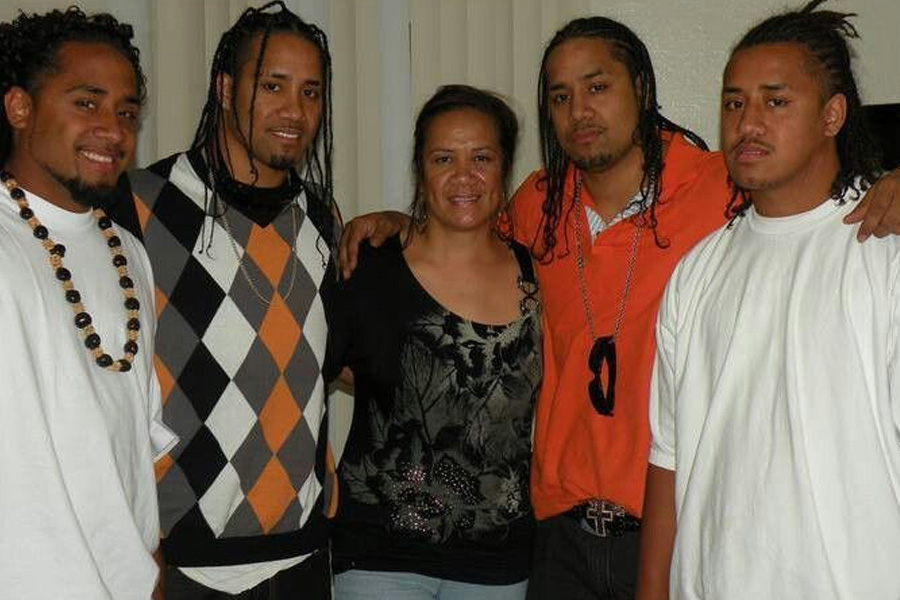
When I look at the story of Talisua Fuavai Fatu, I see a remarkable contrast between public fame and private devotion. Her husband, Solofa Fatu Jr., became internationally known as Rikishi, while several of their children became major WWE performers. Talisua, however, chose a very different path. Rather than standing beneath the arena lights, she became the steady presence behind the family.
Talisua is of Samoan descent and is widely associated with the Fatu branch of the enormous Anoaʻi wrestling family. Her life has largely remained outside entertainment coverage, and that privacy makes her biography much less detailed than those of her husband and sons. She is often described as a homemaker and devoted wife and mother who helped maintain the family home while Rikishi traveled for wrestling.
Some secondary accounts give her birthday as April 28, although her birth year has not been firmly established publicly. She is also sometimes called Sua. Her early life is similarly private, with California appearing repeatedly in accounts of the family’s history before the family later became associated with Pensacola, Florida.
| Personal detail | Information |
|---|---|
| Full name | Talisua Fuavai Fatu |
| Nickname | Sua |
| Heritage | Samoan |
| Spouse | Solofa Fatu Jr. known as Rikishi |
| Marriage | 1985 |
| Birthday | April 28 is reported by some secondary accounts |
| Public career | No independently documented professional career |
| Known role | Homemaker and family supporter |
| Family connection | Fatu and Anoaʻi wrestling dynasty |
A Marriage That Has Spanned Decades
1985 saw Talisua marry Solofa Fatu Jr. Some sources have the wedding date as July 20, 1985. Their marriage began before Rikishi became a WWE superstar and lasted throughout his career transition.
Rikishi’s career required travel, extended absences, physical sacrifice, and an unpredictable wrestling schedule. The crowd barely noticed Talisua’s input. Fans saw Rikishi wrestle, win titles, create unique personas, and reach the WWE Hall of Fame, but family life continued.
Rikishi’s nose-rubbing during ring entrances shows his passion for Talisua. A little gesture, yet it shows the bond behind the superstar wrestler.
Talisua joined one of wrestling’s most unique families after their marriage. The Fatu family is linked to the Anoaʻi dynasty, which has produced generations of professional wrestlers.
The Children Who Carried the Fatu Name Into WWE
Accounts differ regarding the exact number of children Talisua and Rikishi have. Many wrestling biographies traditionally identify five children, while other accounts describe eight children, including seven sons and one daughter. Because the family has intentionally protected the privacy of some members, public information is inconsistent.
Several children, however, are widely recognized.
Thavana Monalisa Fatu
Thavana Monalisa Fatu is generally described as the family’s daughter and was reportedly born June 29, 1983, in California. Unlike her famous brothers, she did not pursue a major professional wrestling career.
Her interests have instead been associated with modeling, fashion design, and music composition. She has maintained a relatively private existence, particularly compared with the enormous public attention surrounding her brothers.
Her position in the family is significant because she represents another side of the Fatu household. The family’s legacy is not exclusively about wrestling. Creativity, fashion, music, and other interests also exist within the next generation.
Jimmy Uso
Jonathan Solofa Fatu, professionally known as Jimmy Uso, was born August 22, 1985, in San Francisco. He is the fraternal twin brother of Jey Uso.
Jimmy and Jey transformed themselves into one of the most successful tag teams of their generation. Together as The Usos, they became multiple-time WWE tag-team champions and eventually became central characters in the larger Bloodline storyline.
Jimmy’s career reflects the mixture of family tradition and individual identity that defines the modern Fatu dynasty. He inherited a wrestling surname and a remarkable family history, but he and Jey developed their own personalities and in-ring identities.
Jey Uso
Joshua Samuel Fatu, better known as Jey Uso, was born on the same day as Jimmy, August 22, 1985.
For years, Jimmy and Jey operated as an inseparable wrestling unit. Their success established them as one of WWE’s defining tag teams. Jey later developed into an important singles performer, creating an identity that extended well beyond tag-team wrestling.
His popularity increased dramatically through his involvement in the Bloodline story and his recognizable “Yeet” persona. His journey demonstrates how a performer from a famous wrestling family can eventually step out from the shadow of his relatives.
Jeremiah Peniata Fatu
Jeremiah Peniata Fatu is another son associated with Rikishi and Talisua. Born around 1986 according to secondary accounts, he appeared briefly on WWE programming as a teenager during the late 1990s.
Unlike Jimmy, Jey, and Solo, Jeremiah did not become a sustained WWE television star. His comparatively quiet public life reinforces the family’s complicated relationship with fame. Being born into a wrestling dynasty does not necessarily mean choosing a public wrestling career.
Solo Sikoa
Joseph Yokozuna Fatu, known professionally as Solo Sikoa, was born March 18, 1993, in Sacramento, California.
Solo represents another major chapter in the family’s WWE history. He became closely associated with The Bloodline and developed a hard-hitting persona centered around the Samoan Spike.
His career brought another Fatu directly into one of WWE’s most prominent modern family storylines. Through Solo, the wrestling legacy established by earlier generations continued into a new era.
The Anoaʻi Family Tree Behind Talisua’s Household
To understand Talisua’s place in wrestling history, I have to look beyond her immediate household. The Anoaʻi family is not simply a collection of famous wrestlers. It is a multigenerational network whose roots extend into Samoan culture, family relationships, traditional bonds, and professional wrestling.
A central figure in the family history was Reverend Amituanaʻi Anoaʻi, who lived from 1914 to 1994. He was born in American Samoa and later became connected with the San Francisco Bay Area.
Amituanaʻi and High Chief Peter Maivia formed a traditional blood-brother relationship. This bond became enormously important because Samoan traditions can recognize such relationships as genuine family connections.
Peter Maivia later became an influential wrestler and promoter. His daughter Ata married Rocky Johnson, and their son became Dwayne Johnson, known worldwide as The Rock.
This means the wrestling family tree extends through both biological relationships and traditional bonds.
The Wild Samoans and the Family’s Wrestling Foundation
Amituanaʻi’s sons Afa and Sika Anoaʻi became The Wild Samoans, one of professional wrestling’s most famous tag teams.
Afa Anoaʻi and Sika Anoaʻi helped establish the family’s reputation during the 1970s and 1980s. Their success created a foundation that later generations would build upon.
Sika became particularly important to Talisua’s extended family because his son is Leati Joseph Anoaʻi, better known as Roman Reigns. Roman became one of WWE’s most dominant modern performers and eventually portrayed the Tribal Chief at the center of The Bloodline storyline.
Another important branch came through Elevera Anoaʻi, who married Solofa Fatu Sr. Their children included Rikishi, Sam Fatu, and Eddie Fatu, who became famous as Umaga.
The family tree therefore connects Talisua’s husband with performers such as Roman Reigns, Umaga, The Usos, Solo Sikoa, and many other wrestlers.
A Family Where Wrestling Became a Generational Language
The scale of the family is difficult to capture in a single paragraph. It includes Yokozuna, Rikishi, Umaga, The Usos, Roman Reigns, Solo Sikoa, Jacob Fatu, Rosey, Samu, Manu, Lance Anoaʻi, Zilla Fatu, and others.
Yokozuna, born Rodney Anoaʻi, became a multiple-time WWF Champion and Royal Rumble winner. His success demonstrated that the family’s influence could extend beyond tag-team wrestling into the main-event singles scene.
Umaga, Rikishi’s brother, became known as the Samoan Bulldozer and captured the WWE Intercontinental Championship. His career was shorter than those of some relatives, but his character became one of the memorable performers of the 2000s.
Roman Reigns later became the centerpiece of WWE’s Bloodline era. The storyline used real family connections as part of its fictional narrative, turning generations of wrestling history into one of WWE’s most recognizable modern sagas.
Jacob Fatu, from the Sam Fatu branch, added another generation to the family’s contemporary wrestling presence.
Talisua as the Private Matriarch
Talisua’s importance is different from that of the wrestlers around her. She does not have championship records, television appearances, or a WWE Hall of Fame biography of her own.
Her legacy is primarily domestic.
For decades, she has been portrayed as the person who helped provide stability while her husband and children navigated professional wrestling. That role can be easy to overlook because it does not produce championship belts or newspaper headlines. Yet a family that includes multiple professional wrestlers across several generations requires an enormous amount of emotional and practical support.
Talisua’s decision to remain private also distinguishes her from many modern celebrity spouses. She does not appear to maintain a verified public social-media identity, and she rarely becomes the subject of independent news coverage.
Her silence is part of the story. In a family famous for performing under bright lights, she has chosen to keep much of her life behind the curtain.
Grandchildren and the Next Generation
The Fatu family has continued to grow through the children of Rikishi and Talisua. Grandchildren including Jaiden Fatu and Jayla Fatu have been mentioned in family contexts, while Jimmy Uso and Jey Uso have children of their own.
Rikishi has spoken publicly about the size of his growing family, including references to a large number of grandchildren. In 2026, he discussed another family addition while referring to the broader number of grandchildren within the family.
Individual details about these children remain limited, which is consistent with the family’s tendency to protect younger relatives from unnecessary publicity.
This creates an interesting contrast. The family name is famous worldwide, but many of its youngest members can still experience an ordinary childhood away from television cameras.
Talisua Fuavai Fatu’s Financial and Professional Profile
An independent professional career that garnered public recognition is not documented for Talisua. She is most known as Rikishi’s wife and mother.
Thus, her net worth estimations should be taken with caution. Public figures may assess couples’ household worth without discriminating between individual and family assets.
Rikishi’s career is more apparent financially. He earned money from decades of professional wrestling, championships, WWE appearances, indie wrestling, and other entertainment. His 2015 WWE Hall of Fame induction was another career highlight.
Jimmy, Jey, and Solo Sikoa’s careers have boosted the family’s finances. WWE contracts, products, appearances, and championships have made Fatu a prominent commercial brand within the Anoaʻi dynasty.
A Timeline of Talisua’s Family Life
| Year | Family milestone |
|---|---|
| 1983 | Thavana Monalisa Fatu is reported as being born |
| 1985 | Talisua marries Rikishi |
| 1985 | Jimmy and Jey Uso are born |
| circa 1986 | Jeremiah Fatu is born |
| 1993 | Solo Sikoa is born |
| Late 1990s | Rikishi reaches greater prominence in WWE |
| 2000s | The family becomes increasingly established in WWE |
| 2015 | Rikishi enters the WWE Hall of Fame |
| 2010s | The Usos become major WWE tag-team stars |
| 2020s | Solo Sikoa becomes prominent in The Bloodline |
| 2020s | The next generation of Fatu grandchildren continues to grow |
| 2026 | Family attention remains focused primarily on the wrestling careers and expanding next generation |
FAQ
Who is Talisua Fuavai Fatu?
Talisua Fuavai Fatu is the longtime wife of professional wrestler Rikishi, whose real name is Solofa Fatu Jr. She is of Samoan descent and is known primarily as a private homemaker and family supporter.
When did Talisua Fuavai Fatu marry Rikishi?
Talisua married Rikishi in 1985. Some accounts identify July 20, 1985, as their wedding date.
How many children do Talisua and Rikishi have?
Public accounts disagree. Some commonly list five children, while other accounts describe eight children, including seven sons and one daughter. The children most frequently identified publicly include Thavana, Jimmy Uso, Jey Uso, Jeremiah Fatu, and Solo Sikoa.
Who are Talisua Fuavai Fatu’s famous children?
Her best-known children are WWE wrestlers Jimmy Uso, Jey Uso, and Solo Sikoa. Her daughter Thavana has pursued creative interests including modeling, fashion, and music.
Is Talisua Fuavai Fatu a professional wrestler?
There is no well-established public record of Talisua having a professional wrestling career. Her role has primarily been described as a wife, mother, homemaker, and supporter of her family’s wrestling careers.
How is Talisua connected to the Anoaʻi family?
Through her marriage to Rikishi, Talisua became part of the Fatu branch of the broader Anoaʻi wrestling dynasty. Her extended family includes major wrestling figures such as Umaga, Roman Reigns, Yokozuna, Jacob Fatu, and other members of the Anoaʻi and Fatu lineage.
Who are Jimmy Uso and Jey Uso?
Jimmy Uso and Jey Uso are fraternal twin brothers born August 22, 1985. Their real names are Jonathan Solofa Fatu and Joshua Samuel Fatu. They became one of WWE’s most successful tag teams before Jey also developed a major singles career.
Who is Solo Sikoa?
Solo Sikoa is Joseph Yokozuna Fatu, the son of Talisua and Rikishi. Born March 18, 1993, he became a prominent WWE performer and an important member of The Bloodline storyline.
How is Roman Reigns related to the family?
Roman Reigns, whose real name is Leati Joseph Anoaʻi, is part of the same extended Anoaʻi wrestling dynasty. He is the son of Sika Anoaʻi, while Rikishi belongs to the Fatu branch of the larger family.
Why is Talisua Fuavai Fatu not frequently seen in public?
Talisua has deliberately maintained a low public profile. Unlike her husband and children, she has not pursued a prominent entertainment career or cultivated a major public social-media presence. Her privacy has allowed her to remain largely outside the intense spotlight surrounding the Fatu and Anoaʻi wrestling dynasty.