A Child Imam Who Grew Into an International Statesman
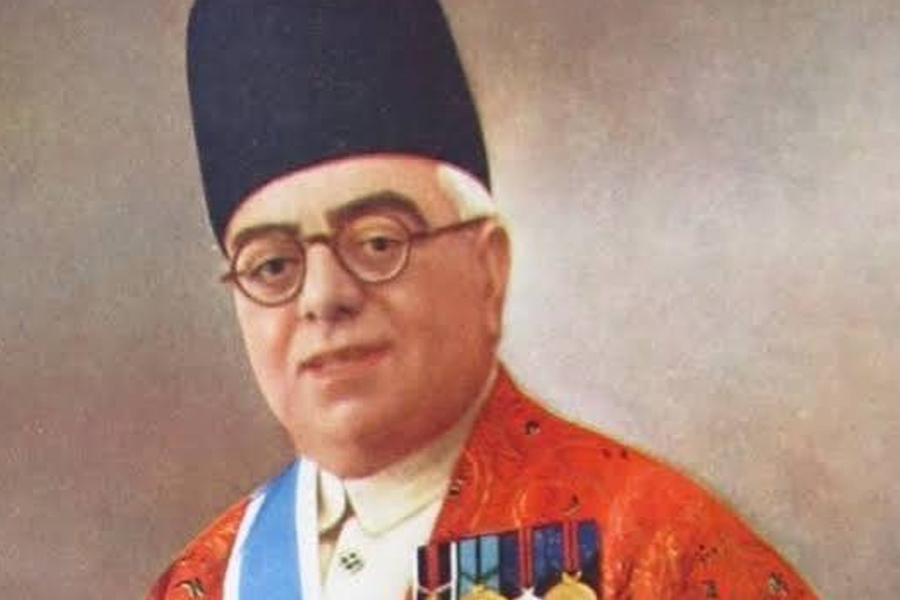
When I look at the life of Aga Sultan Mahomed Shah Aga Khan, I see a remarkable mixture of spiritual leadership, political ambition, family tradition, philanthropy, and cosmopolitan sophistication. Known more widely as Sir Sultan Muhammad Shah, Aga Khan III, he was born on 2 November 1877 at Honeymoon Lodge in Karachi, then part of British India. He died on 11 July 1957 at his villa in Versoix near Geneva, Switzerland, after serving as the hereditary Imam of the Nizari Ismaili Muslims for approximately 72 years.
He became the 48th Imam in August 1885 following the death of his father, Aga Khan II. He was only about seven or eight years old. Few children could have inherited a responsibility of such magnitude. Yet his childhood quickly became a preparation for leadership. His mother, Nawab A’lia Shams al Muluk, played a particularly important role. A Persian noblewoman and granddaughter of Fath Ali Shah of Iran, she supervised his education and managed family affairs after her husband’s death.
His education combined Islamic and Persian traditions with Western learning. He later studied in Britain and became comfortable moving between Indian, European, Muslim, and British political circles. In 1886, the British government formally recognized him with the title His Highness.
His long Imamate became a bridge between tradition and modernity. He believed that religious identity did not have to stand against education, science, economic development, or social reform. Instead, he treated these elements as tools for strengthening communities.
Building Institutions and Shaping Muslim Political Life
Aga Khan III’s influence extended far beyond religious leadership. I find his institutional work especially significant because he understood that lasting change required structures that could survive individual personalities.
Beginning in the early twentieth century, he helped organize Ismaili communities through constitutions, councils, schools, welfare institutions, healthcare initiatives, housing programmes, and economic cooperatives. An important early constitution was introduced in East Africa around 1905, followed by similar organizational development elsewhere.
Education was one of his strongest priorities. He particularly encouraged the education of girls, taking a position that was strikingly progressive for his era. He argued that if a family could educate only one child, the daughter should receive that opportunity. This reflected his broader conviction that educated women strengthened entire families and communities.
His political career was equally substantial. In 1906, he led the Muslim deputation to Viceroy Lord Minto, advocating political representation for Muslims in British India. That intervention became associated with the development of separate electorates and later constitutional reforms.
He was also among the founders of the All India Muslim League and served as its first permanent president. Although he eventually stepped away from the presidency, his influence remained important. His political thinking helped advance the idea that Muslims in India constituted a distinct political community with legitimate institutional interests.
He supported the development of Aligarh’s educational institutions and participated in the Round Table Conferences between 1930 and 1932. Later, he became an international statesman through the League of Nations. He served in its Assembly and was elected President of the 18th Assembly in 1937.
His honors included the KCIE in 1897, the GCIE in 1902, the GCSI, the GCMG, and appointment to the British Privy Council in 1934. His career therefore stretched from the religious leadership of a young Ismaili community to the diplomatic stage of international politics.
Four Marriages and a Remarkable Family
Four times, Aga Khan III married, each reflecting a distinct era of his extraordinary worldwide life.
His first wife was Shahzadi Begum, his first cousin and Aga Khan I’s granddaughter. In Poona, they married on 2 November 1896. Unhappy marriage ended without children. Later in life, Aga Khan III acknowledged the challenges of youth.
Italian Ballet Opera of Monte Carlo dancer Cleope Teresa Magliano was his second wife. They married about 1908. Teresa became Princess Aga Khan after converting to Islam. They have 2 boys.
First son Giuseppe Mahdi Khan was born in 1909 or 1910 and died in February 1911 in infancy. Their 1911 Turin-born son Prince Aly Khan survived.
Aly Khan took his father’s love of horses, elegance, and international society. He became Pakistan’s UN ambassador and a famous racehorse fan. The family became more famous after his weddings. Princes Karim and Amyn were his children with Joan Yarde Buller, while Princess Yasmin Aga Khan was his daughter with Rita Hayworth.
After surgery, Teresa Magliano died in 1926.
Andrée Joséphine Carron, a Parisian dressmaker and hatmaker, was Aga Khan III’s third wife. Their civil wedding was in Aix les Bains on 7 December 1929 and their religious wedding in Bombay on 13 December. Their 1933 son was Prince Sadruddin Aga Khan. The 1943 divorce ended the marriage.
Sadruddin has a great international career. Harvard educated, he was UN High Commissioner for Refugees from 1966 until 1977. He was well regarded in the Aga Khan family for his humanitarian endeavours. After Nina Dyer, he married Catherine Aleya Sursock. He had Catherine’s stepchildren but no biological children.
Yvette Blanche Labrousse was Aga Khan III’s fourth and last wife. Born February 15, 1906, she was Miss France 1930. She became his social secretary before marrying him and became Om Habibeh after converting to Islam. Geneva hosted their 9 October 1944 wedding.
She became Begum Aga Khan and Mata Salamat. She was his close friend in his later years despite their childless marriage. Her loyalty persisted after his death. Her heartfelt habits included placing a new rose on his Aswan casket daily.
Prince Aly Khan and the Succession That Changed the Family
The succession after Aga Khan III’s death produced one of the most consequential decisions in modern Ismaili history.
Many might have expected his eldest surviving son, Aly Khan, to become Imam. Instead, Aga Khan III designated his grandson Prince Karim al Husseini as his successor. Karim became Aga Khan IV in 1957 at only 20 years old.
The decision demonstrated Aga Khan III’s willingness to think beyond conventional hereditary expectations. He believed the Ismaili community required a young and modern leader capable of facing the conditions of the atomic age and a rapidly changing world.
Aly Khan died in a car accident near Paris in 1960, only three years after his father’s death. His children continued the family’s public and philanthropic presence. Prince Karim became one of the most influential religious and development leaders of the twentieth and early twenty first centuries. Prince Amyn Aga Khan became involved in cultural and philanthropic activities, while Princess Yasmin Aga Khan became an advocate for Alzheimer’s awareness.
A Racehorse Empire Alongside Philanthropy
Aga Khan III also developed an extraordinary reputation in Thoroughbred racing. Horses were not merely a pastime for him. They became one of the most visible expressions of his interests in breeding, competition, and European high society.
He became British flat racing Champion Owner 13 times and was associated with five Epsom Derby winners, including Blenheim, Bahram, Mahmoud, My Love, and Tulyar. His horses won 16 British Classic races overall.
The contrast in his life is striking. On one side stood political meetings, religious councils, schools, and welfare institutions. On the other stood elegant racecourses, European estates, fashionable society, and championship horses. He moved comfortably between these worlds.
He also donated the Aga Khan Trophy for international show jumping in Ireland, demonstrating that his interest in equestrian sport extended beyond racing.
Wealth, Jubilees, and Community Development
Aga Khan III inherited substantial family wealth connected to Persian and Indian estates, investments, and other assets. His financial position allowed him to maintain residences and an international lifestyle, but his wealth cannot be separated from his extensive philanthropic commitments.
His Golden Jubilee in 1937, Diamond Jubilee in 1946, and Platinum Jubilee in 1954 generated major gifts from Ismaili followers. These celebrations became important mechanisms for funding schools, hospitals, welfare institutions, and community development.
The distinction between his personal fortune and community contributions is important. Community contributions were directed toward institutional purposes, while his personal wealth supported his private lifestyle, investments, estates, and racing interests.
He also wrote extensively. His books included India in Transition, published in 1918, and his autobiography The Memoirs of Aga Khan: World Enough and Time, published in 1954. These writings provide a window into the mind of a man who had witnessed colonial politics, Muslim reform movements, European society, and the emergence of new nations.
The Aga Khan Development Legacy
The institutional philosophy developed during Aga Khan III’s lifetime became an important foundation for the later Aga Khan Development Network. Under his grandson, Aga Khan IV, these earlier traditions expanded into a large international development system working in education, healthcare, culture, economic development, habitat, microfinance, and civil society.
Today, the Network operates across numerous countries in Africa and Asia and serves people regardless of religious background. Its philosophy emphasizes pluralism, human dignity, self reliance, education, healthcare, and sustainable economic development.
Institutions such as the Aga Khan Foundation, Aga Khan University, Aga Khan Health Services, Aga Khan Education Services, Aga Khan Trust for Culture, Aga Khan Fund for Economic Development, and Aga Khan Agency for Habitat represent the broad institutional world that grew from the same underlying philosophy of community service.
After Aga Khan IV’s death in February 2025, the hereditary Imamate passed to his successor, Aga Khan V, Prince Rahim Aga Khan. The transition connected the modern development network directly to a tradition whose institutional foundations reach back to Aga Khan III and his predecessors.
His Final Years and Burial in Aswan
Later in life, Aga Khan III moved between Switzerland, France, Britain, and other European countries. His foreign lifestyle continued as his political career declined.
An armed robbery attempt on him and his wife near Cannes in 1949 was remarkable. He was calm despite the risk, according to accounts.
He died at his Versoix house in Geneva on July 11, 1957. He named his grandson Karim as his successor, establishing a new Ismaili leadership.
He picked a grave remote from Karachi and Europe, where he spent much of his adult life. He was interred in an Aswan tomb overlooking the Nile. Setting offers his life an appropriate geographical conclusion. He sleeps near one of the world’s oldest and most historic rivers after decades of travelling continents.
Frequently Asked Questions
Who was Aga Sultan Mahomed Shah Aga Khan?
Aga Sultan Mahomed Shah, better known as Aga Khan III, was the 48th hereditary Imam of the Nizari Ismaili Muslims. He served as Imam from 1885 until his death in 1957 and became an influential religious leader, political figure, philanthropist, author, and racehorse owner.
When was Aga Khan III born?
He was born on 2 November 1877 in Karachi, then part of British India. His birthplace was Honeymoon Lodge.
Who were his parents?
His father was Aga Khan II, also known as Aqa Ali Shah, the 47th Imam. His mother was Nawab A’lia Shams al Muluk, a Persian noblewoman descended from Fath Ali Shah of the Qajar dynasty.
How many wives did Aga Khan III have?
He married four times. His wives were Shahzadi Begum, Cleope Teresa Magliano, Andrée Joséphine Carron, and Yvonne Blanche Labrousse, who became known as Om Habibeh and Mata Salamat.
Who were Aga Khan III’s children?
His children included Giuseppe Mahdi Khan, who died in infancy, Prince Aly Khan, and Prince Sadruddin Aga Khan. Aly Khan became the father of Aga Khan IV and Prince Amyn Aga Khan, as well as Princess Yasmin Aga Khan through his marriage to Rita Hayworth.
Why did Aga Khan III choose his grandson as successor?
Aga Khan III designated Prince Karim al Husseini, his grandson through Aly Khan, as his successor. The decision reflected his belief that a young, modern, educated leader was better suited to guide the Ismaili community through the rapidly changing political and technological environment of the twentieth century.
What was Aga Khan III’s connection to Pakistan?
He was an important Muslim political leader in British India and participated in movements advocating greater political recognition for Muslims. He helped establish the All India Muslim League and served as its first permanent president. His earlier political work contributed to the intellectual and institutional environment from which the idea of Pakistan later emerged.
Where is Aga Khan III buried?
He is buried in a mausoleum overlooking the Nile in Aswan, Egypt. His tomb became one of the most recognizable historical sites associated with the Aga Khan family.
What was Aga Khan III’s greatest legacy?
His greatest legacy was the combination of spiritual leadership with institution building. He promoted education, healthcare, community organization, economic cooperation, and political representation while encouraging Ismailis to engage confidently with the modern world. The institutions and principles developed during his leadership became part of the foundation for the much larger international development efforts associated with the Aga Khan family.